
Article by Tom Cheek | Head of Education, Skills & Quality – Society for the Environment
In many networks and articles, its’ often described that technicians are the ‘heartbeat of operations’, with awareness campaigns that demonstrate how technicians ‘make things happen’ or ‘make a difference’.
When we explore what environmental sustainability means, the focus often falls on strategy, policy, leadership and targets. While these are all important, delivering environmental improvement and sustainability outcomes also depends on a workforce able to apply technical knowledge and skills. Across organisations of all sizes and sectors, technicians are often the people who translate environmental ambitions and convert them to actions.
Through my work across education, skills and professional registration, I have seen how diverse and influential technician careers can be. Whether that be operating renewable energy systems, maintaining water infrastructure, monitoring habitats, collecting environmental data, implementing construction projects, supporting environmental management systems, managing green spaces, or helping organisations improve their sustainability performance, technicians play a vital role in delivering environmental outcomes.
At the Society for the Environment (SocEnv), we have recently been exploring how to define technicians, with one example being:
‘Skilled professionals who apply technical knowledge, practical expertise and professional judgement to deliver, support and improve environmental outcomes. They play a vital role in implementing solutions, operating and maintaining systems, collecting and interpreting information, and translating environmental objectives into practical action.
Working with colleagues, stakeholders and communities, they support sustainable environmental management, promote good practice, influence positive environmental behaviours, and contribute to continuous improvement. They may also guide, supervise and support others within their areas of responsibility.
Technicians contribute across a wide range of sectors and occupations, helping organisations achieve sustainability, nature recovery and net-zero ambitions.’
This definition helps to broaden perceptions of what it means to be a technician. Environmental technicians are not confined to a single sector, educational pathway or job title. They work across a wide range of occupations and disciplines, often combining technical expertise with communication, problem-solving and professional judgement.
We see this reflected in many of those who achieve Registered Environmental Technician (REnvTech) status. In some cases their job title may not include the word ‘technician’, but when reviewing their competence, experience and responsibilities, it is clear that technical knowledge, practical expertise and professional judgement are central to the role they perform. Environmental and technical professionalism should be based on competence and contribution, not simply job title or educational route.
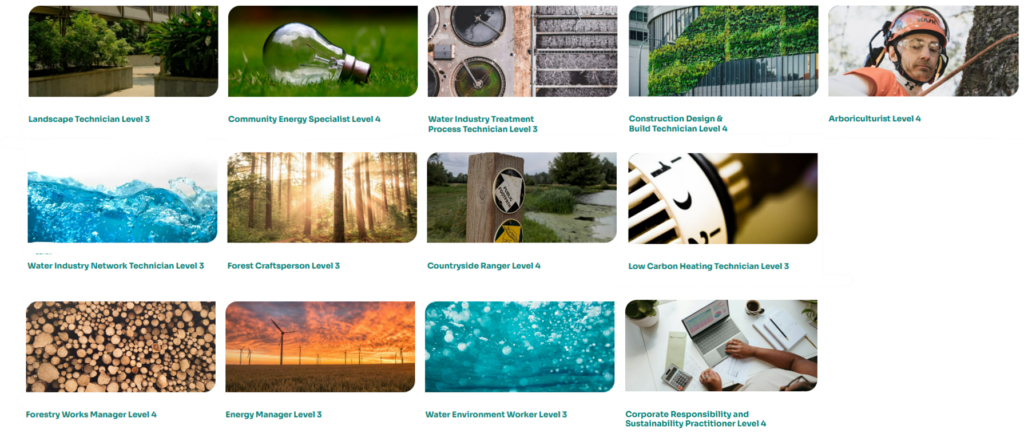
This variety of job posts is reflected in the routes people take into environmental careers. Increasingly, apprenticeships are providing opportunities for individuals to develop technical skills whilst making a direct contribution in the workplace. Through SocEnv’s work on apprenticeship pathways, we have seen environmental technician roles emerging across areas such as agriculture & horticulture, arboriculture & forestry, construction & the built environment, ecology & fisheries, energy, engineering, environmental & sustainability management, resource management, and water to name a few.
These routes are helping to strengthen connections between education, skills and employment. They also demonstrate that technical careers should be valued alongside more traditional academic pathways. Achieving greater parity of esteem between technical and academic routes remains a challenge across many sectors, but it is a challenge worth addressing if we are serious about developing the workforce needed to respond to environmental and sustainability challenges. With an increasing offer in the technical and vocational space, with examples such as T Levels and Higher Technical Qualifications, there are ever-increasing routes to technician roles that require environmental professionalism embedded.
Whilst on the term of embedding, one of the reasons technicians can sometimes be overlooked is that their contribution is often embedded within day-to-day operations. When things are working well, their expertise can become almost invisible. Yet organisations rely heavily on technicians to operate systems safely and effectively, interpret information, maintain standards, train and support colleagues, and identify opportunities for improvement.
Recognising this contribution is one of the reasons SocEnv became a supporter of the Technician Commitment. Through our commitment, we have pledged to help raise the visibility, recognition and development of technicians across the environmental profession. This includes creating opportunities for technicians to share their experiences through case studies, events, podcasts and professional networks; highlighting the role technicians play in supporting learners and apprentices; promoting routes to professional recognition; and encouraging technician representation across our wider activities and governance. You can read more about this commitment and our actions plan here – Technician Commitment | Society for the Environment

Professional registration is an important aspect of why SocEnv exists. We hold a Royal Charter with a responsibility to champion and register environmental professionals with proven competence. With our range of registers, we are in a strong place to lead in raising the profile and prestige of environmental technicians across sectors.
Gaining recognition for their knowledge, skills and experience can be an important milestone for a technician. It provides independent recognition of competence, commitment and professionalism, whilst connecting individuals to a wider community of practice and continuous professional development.
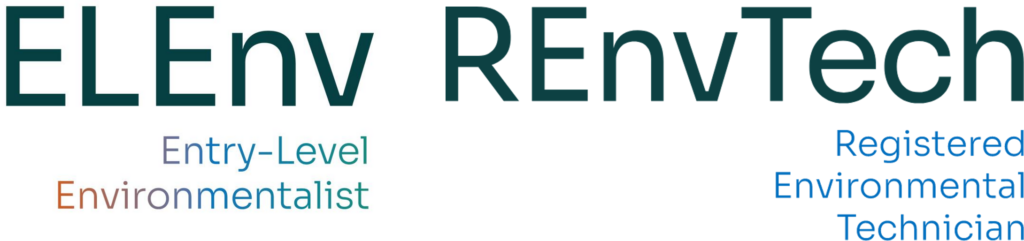
The introduction of Entry-Level Environmentalist (ELEnv) in 2026 has created an accessible starting point for many people beginning their environmental journey. For apprentices, learners, career changers and those at an early stage in their development, ELEnv offers an opportunity to demonstrate commitment to environmental professionalism and begin building a recognised professional identity.
As knowledge, experience and responsibility develop, Registered Environmental Technician (REnvTech) provides a further opportunity to gain professional recognition for technical competence and practical environmental expertise. Together, ELEnv and REnvTech help create a clearer progression route, supporting individuals as they develop throughout their careers.
These routes also recognise that careers are rarely linear. People enter environmental work through different educational pathways, occupations and life experiences. Some begin through apprenticeships, others through technical qualifications, employment-based learning or career transitions. Professional registration should reflect that flexibility and support progression wherever the starting point may be. This principle underpins much of SocEnv’s work on apprenticeship mapping, technical education and professional registration pathways.
There is a significant opportunity to continue raising awareness of technician careers and the value they bring. The environmental challenges facing society will require people with practical skills, technical capability and a commitment to continuous improvement. Technicians already make an enormous contribution to this work, but there is more we can do to celebrate their achievements, support their development and showcase the breadth of opportunities available. Technicians are a key part of the registrant community where our mission is a ‘sustainable future shaped by trusted environmental professionalism’.
There is significant opportunity for more technicians to combine environmental professional registration with professional status in their primary discipline. For example, a technician might hold REnvTech alongside engineering, scientific or other specialist professional recognition. This combination has the potential to be particularly influential, creating professionals who can bridge disciplines, champion innovation and help embed environmental thinking into established ways of working.
So, coming full circle and returning to the idea of technicians as the heartbeat of operations, they undoubtedly are. However, they are also a vital part of the environmental profession, applying technical knowledge and practical expertise to help deliver environmental outcomes. Through our support of the Technician Commitment and the Registered Environmental Technician (REnvTech) register, SocEnv is committed to helping ensure that technicians receive the visibility, support and recognition their contribution deserves.
As environmental considerations become increasingly important across all sectors, recognising and supporting technicians will be essential to developing the skilled workforce needed to meet future environmental challenges.